
Table of Contents
A cancer diagnosis often begins with an unexpected finding—a lump, an abnormal scan, a persistent ulcer, a change in bowel habits, blood in the urine, or another symptom that requires further evaluation.
Your doctor may recommend a Cancer Biopsy to find out what is causing the abnormality.
For many patients and families, the word “biopsy” can immediately create anxiety. You may wonder:
- Does a biopsy mean I definitely have cancer?
- Is a biopsy painful?
- How is a biopsy performed?
- How long does it take?
- When will I receive the results?
- What does a biopsy report tell me?
- What happens if the biopsy confirms cancer?
- Will I need surgery, chemotherapy or another treatment?
These are common and understandable questions.
A biopsy is an important diagnostic procedure used to examine a sample of cells or tissue under a microscope. Depending on the situation, it can help doctors determine whether abnormal tissue is cancerous, identify the type of cancer, and provide information that helps guide further evaluation and treatment.
A Biopsy for Cancer Diagnosis is only one part of the overall cancer-care process. Doctors may also consider your symptoms, physical examination, imaging scans, laboratory tests and other investigations before developing an individualized treatment plan.
If you have been advised to undergo a biopsy or have already received a biopsy report, consulting a qualified surgical oncologist can help you understand what the results may mean and what steps could come next.
For patients looking for a Cancer Specialist in Solapur, Dr. Praveenkumar Surpur, Consultant Surgical Oncologist at Yashodhara Super Speciality Hospital, provides evaluation and personalized treatment planning for various cancers.
What Is a Cancer Biopsy?
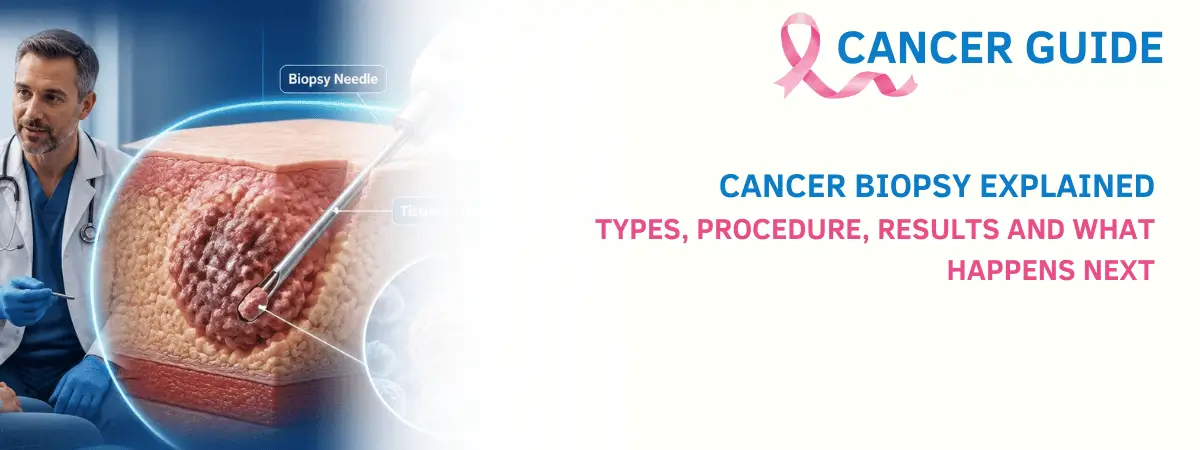
A Cancer Biopsy is a medical procedure in which a small sample of cells or tissue is collected from an abnormal area and examined in a laboratory.
The sample is generally evaluated by a pathologist, a specialist who examines tissues and cells to identify disease.
A biopsy may help answer important questions such as:
- Is the abnormal tissue cancerous?
- What type of cancer is present?
- What is the cancer’s specific subtype?
- Are there features that may influence treatment?
- Is additional testing required?
The exact information available from a biopsy depends on the type of tissue collected, the suspected cancer and the laboratory tests performed.
A biopsy does not always mean that cancer is present.
Doctors may recommend a biopsy when an abnormality needs a more definite diagnosis. The final diagnosis is made by considering the pathology findings together with the patient’s clinical history, examination and other relevant investigations.
Why Is a Biopsy Needed for Cancer Diagnosis?
Imaging tests such as CT scans, MRI scans, ultrasound, mammograms and PET scans can identify areas that look abnormal.
However, an imaging scan alone may not always confirm exactly what an abnormal area represents.
For example, a lump or mass may be:
- Benign
- Inflammatory
- Infectious
- Pre-cancerous
- Cancerous
- Another type of abnormal tissue
A Biopsy for Cancer Diagnosis allows a tissue or cell sample to be examined directly.
In many situations, this information is essential for determining the next step.
The biopsy result may help doctors decide whether the patient needs:
- Observation
- Further diagnostic testing
- Surgery
- Chemotherapy
- Radiation therapy
- Targeted therapy
- Immunotherapy
- A combination of treatments
The exact treatment depends on the cancer type, stage, location, biological characteristics and the patient’s overall health.
You can learn more about cancer biopsy services in Solapur and how biopsy evaluation may contribute to cancer diagnosis and treatment planning.
Does Having a Biopsy Mean You Have Cancer?
No.
Having a biopsy does not automatically mean that you have cancer.
Doctors recommend biopsies for many different reasons.
A biopsy may be performed to investigate:
- A lump
- An abnormal growth
- A suspicious lesion
- A non-healing ulcer
- An abnormal lymph node
- An unusual skin lesion
- An abnormal organ finding
- A suspicious area seen on an imaging scan
The biopsy may show:
- Benign tissue
- Inflammation
- Infection
- Pre-cancerous changes
- Cancer
Therefore, it is important not to assume that a biopsy recommendation means cancer has already been confirmed.
The purpose of the procedure is to obtain more information so that your healthcare team can make an accurate diagnosis.
When Might a Doctor Recommend a Cancer Biopsy?
A doctor may recommend a biopsy when an abnormality requires further evaluation.
Some common situations include:
Breast Lump or Breast Abnormality
A suspicious breast lump or imaging finding may require tissue sampling.
Depending on the diagnosis, treatment may involve different surgical approaches. Patients can learn more about breast cancer surgery in Solapur and related treatment options.
Persistent Mouth or Tongue Lesion
A mouth ulcer or lesion that does not heal may require evaluation and, in selected cases, biopsy.
Relevant surgical oncology resources include oral cancer surgery in Solapur and tongue cancer surgery in Solapur.
Neck Lump
A persistent neck lump may require further investigation, which may include imaging and tissue sampling.
If cancer is diagnosed, treatment planning may involve procedures such as neck dissection surgery in Solapur depending on the specific condition.
Thyroid Nodule
Some thyroid nodules may require biopsy or other investigations to determine whether cancer is present.
If thyroid cancer is diagnosed, treatment may include thyroid cancer surgery in Solapur depending on individual circumstances.
Abnormal Finding in the Digestive System
A suspicious lesion in the stomach, colon or rectum may require tissue evaluation.
If cancer is confirmed, treatment may include stomach cancer surgery in Solapur, colon cancer surgery in Solapur or rectal cancer surgery in Solapur, depending on the diagnosis.
What Are the Different Types of Cancer Biopsy?
There are several types of biopsy procedures.
The appropriate method depends on:
- Location of the abnormal tissue
- Size of the lesion
- Accessibility
- Suspected cancer type
- Imaging findings
- Overall health
- Information required for diagnosis
Common biopsy methods include needle biopsy, core needle biopsy, incisional biopsy and excisional biopsy.
Some tissue samples may also be collected during an endoscopic procedure or surgery.
Let’s understand the common approaches.
1. Fine-Needle Aspiration Biopsy
Fine-needle aspiration, often called FNA, uses a thin needle to collect cells or fluid from an abnormal area.
The procedure may be used for selected:
- Lumps
- Thyroid nodules
- Lymph nodes
- Other accessible abnormalities
The collected cells are then examined in the laboratory.
FNA is generally less invasive than a surgical biopsy, but the amount of tissue obtained may be limited.
Depending on the clinical question, the doctor may recommend another type of biopsy if more tissue is needed.
2. Core Needle Biopsy
A core needle biopsy uses a larger needle to remove small cylinders or “cores” of tissue.
This can provide more tissue architecture than FNA.
Core needle biopsy may be used for certain:
- Breast abnormalities
- Soft tissue masses
- Lymph nodes
- Other accessible lesions
The procedure may be performed using imaging guidance when necessary.
For example, ultrasound or another imaging method may help the doctor accurately target the abnormal area.
3. Incisional Biopsy
An incisional biopsy removes only a portion of an abnormal lesion.
This approach may be considered when:
- The lesion is large
- Removing the entire lesion initially is not appropriate
- A diagnosis is needed before planning definitive treatment
The tissue sample is then sent to the pathology laboratory for examination.
4. Excisional Biopsy
An excisional biopsy removes the entire abnormal area or lesion.
This may sometimes be appropriate for small, accessible lesions.
The decision depends on the location and characteristics of the abnormality.
Removing an entire lesion is not always necessary or appropriate. The biopsy method should be selected according to the clinical situation.
5. Image-Guided Biopsy
Some abnormalities are located deep inside the body or cannot be easily felt during examination.
In such situations, imaging may be used to guide the biopsy needle.
Depending on the location, guidance may involve:
- Ultrasound
- CT scan
- Other imaging techniques
The goal is to obtain a representative tissue sample as safely and accurately as possible.
6. Endoscopic Biopsy
When an abnormal area is located inside the digestive or respiratory tract, a biopsy may sometimes be obtained during an endoscopic examination.
For example, a doctor may use an endoscope to examine an internal organ and collect tissue from a suspicious area.
The sample is then sent for pathological examination.
7. Surgical Biopsy
In some cases, tissue may need to be obtained through a surgical procedure.
The approach depends on:
- Location of the lesion
- Size
- Accessibility
- Suspected diagnosis
- Treatment requirements
Surgical biopsy may be considered when other biopsy techniques cannot provide sufficient information.
What Happens During a Cancer Biopsy Procedure?
The exact steps of a Cancer Biopsy Procedure vary depending on the type of biopsy.
However, the process generally involves several stages.
Step 1: Medical Evaluation
Your doctor reviews your medical history, symptoms and previous test results.
Imaging may be reviewed to identify the exact location of the abnormal area.
Step 2: Choosing the Biopsy Method
The doctor determines which biopsy approach is most suitable.
The decision may depend on:
- Location
- Size
- Type of lesion
- Accessibility
- Amount of tissue required
Step 3: Preparing for the Procedure
Depending on the biopsy, you may be asked to:
- Avoid eating or drinking for a specific period
- Adjust certain medications
- Inform your doctor about blood thinners
- Complete additional tests
Follow your healthcare team’s instructions carefully.
Step 4: Local or Other Anesthesia
Some biopsy procedures require local anesthesia to numb the area.
Other procedures may require sedation or general anesthesia, depending on the location and complexity.
Step 5: Collecting the Tissue Sample
The doctor collects the required cells or tissue.
The procedure may be guided by:
- Physical examination
- Ultrasound
- CT imaging
- Endoscopy
- Other techniques
Step 6: Sending the Sample to the Laboratory
The tissue is preserved and sent to a pathology laboratory.
A pathologist examines the sample under a microscope and may perform additional tests.
Step 7: Receiving the Report
The biopsy report is reviewed by your treating doctor along with your clinical findings and imaging results.
The next step depends on the complete picture.
Is a Cancer Biopsy Painful?
The level of discomfort varies depending on the biopsy type and the location of the tissue being sampled.
Many needle biopsies are performed using local anesthesia.
You may feel:
- A brief needle prick
- Pressure
- Mild discomfort
- Temporary soreness
Some procedures may cause more discomfort than others.
Your healthcare team can explain what you may experience before the procedure.
If you have concerns about pain or anxiety, discuss them with your doctor before the biopsy.
How Long Does a Cancer Biopsy Take?
The duration depends on the type of biopsy.
Some needle biopsies may be completed relatively quickly.
Other biopsies may require:
- Imaging guidance
- Sedation
- Endoscopy
- Surgical procedures
The time spent at the hospital or clinic may therefore vary.
Your doctor or healthcare team can provide more specific information based on the planned procedure.
How Long Does It Take to Get a Cancer Biopsy Result?
The time required for a biopsy report varies.
It may depend on:
- Type of tissue
- Complexity of the diagnosis
- Additional laboratory tests
- Special staining
- Molecular testing
- Immunohistochemistry
Some reports may be available within a few days, while complex cases may take longer.
A delay does not automatically mean that something is wrong.
Sometimes additional testing is necessary to accurately identify the type or characteristics of abnormal cells.
What Does a Cancer Biopsy Report Tell You?
A pathology report can contain several types of information.
Depending on the biopsy, it may describe:
- Whether cancer is present
- Type of cancer
- Tumor subtype
- Grade
- Cell characteristics
- Other pathological features
- Biomarker information, when applicable
The report may contain medical terminology that is difficult to understand.
Your doctor can explain the findings in the context of your complete clinical situation.
It is important to remember that the biopsy report is only one part of the overall diagnostic process.
What Is the Difference Between Cancer Grade and Cancer Stage?
Patients often confuse grade and stage.
They are not the same.
Cancer Grade
Grade generally describes how abnormal cancer cells appear under a microscope and may provide information about how the cells behave.
Cancer Stage
Stage describes the extent of cancer in the body.
It may consider:
- Tumor size
- Nearby lymph nodes
- Spread to distant organs
Doctors use staging information to help determine appropriate treatment.
You can learn more about cancer staging and treatment planning in Solapur.
What Happens After a Cancer Biopsy?
The next step depends on the biopsy result.
There are several possibilities.
If the Biopsy Is Benign
If the tissue is benign, cancer may not be present.
Your doctor may recommend:
- Observation
- Follow-up imaging
- Treatment for another condition
- Removal of the lesion in selected situations
The next step depends on the specific diagnosis.
If the Biopsy Shows Pre-Cancerous Changes
Some biopsy results may show changes that are not invasive cancer but may require monitoring or treatment.
Your doctor will explain what the findings mean and whether further management is necessary.
If the Biopsy Confirms Cancer
If cancer is confirmed, additional evaluation may be required.
This may include:
- Imaging
- Blood tests
- Additional pathology testing
- Molecular or biomarker testing
- Cancer staging
Once the diagnosis and stage are understood, the treatment team can develop a personalized plan.
Depending on the cancer, treatment may involve:
- Surgery
- Chemotherapy
- Radiation therapy
- Targeted therapy
- Immunotherapy
- Combination treatment
You can learn more about chemotherapy treatment in Solapur and targeted therapy and immunotherapy in Solapur.
Does Every Cancer Patient Need Surgery After a Biopsy?
No.
A biopsy confirming cancer does not automatically mean that surgery is required.
Treatment depends on:
- Cancer type
- Cancer stage
- Tumor location
- Tumor characteristics
- Spread of disease
- Overall health
- Previous treatment
- Other medical factors
Some cancers are primarily treated with surgery.
Others may require chemotherapy, radiation, targeted therapy, immunotherapy or a combination of treatments.
In some situations, surgery may be performed before additional treatment.
In other situations, treatment may begin with chemotherapy or another therapy before surgery.
This is why a personalized treatment plan is important.
How Does Cancer Biopsy Help With Treatment Planning?
A biopsy may provide information that helps the cancer team understand the disease.
The information may contribute to decisions about:
- Whether surgery is appropriate
- Which type of surgery may be considered
- Whether chemotherapy may be needed
- Whether radiation therapy may be recommended
- Whether targeted therapy or immunotherapy may be suitable
- Whether additional diagnostic testing is required
For example, patients diagnosed with certain gastrointestinal cancers may require different surgical approaches.
Depending on the location and extent of disease, treatment may include procedures such as:
- Hemicolectomy
- Total colectomy
- Anterior resection
- Abdominoperineal resection
Patients can explore information about hemicolectomy surgery in Solapur, total colectomy surgery in Solapur and APR surgery in Solapur.
The correct procedure depends on individual clinical factors and should be decided after appropriate evaluation.
Can a Biopsy Determine the Exact Cancer Stage?
Not always.
A biopsy can provide important information about the cancer itself, but determining the complete stage may require additional tests.
Staging may involve:
- CT scans
- MRI
- PET-CT
- Ultrasound
- Other imaging
- Lymph node assessment
- Surgical findings
- Pathology results
The exact staging process depends on the cancer type.
For this reason, the biopsy is often an important step in the diagnostic journey, but it may not be the final step.
Can a Biopsy Be Used to Decide Whether Cancer Surgery Is Possible?
A biopsy can help establish the diagnosis, but the decision about whether surgery is appropriate usually requires a broader assessment.
Doctors may consider:
- Biopsy findings
- Cancer stage
- Imaging
- Tumor location
- Involvement of nearby structures
- Distant spread
- General health
- Fitness for surgery
In selected cancers, surgery may be an important part of treatment.
For example, surgical oncology services may include kidney cancer surgery in Solapur, bladder cancer surgery in Solapur, lung cancer surgery in Solapur or esophageal cancer surgery in Solapur when appropriate for the patient’s condition.
What Is the Role of a Surgical Oncologist After a Cancer Biopsy?
A surgical oncologist specializes in the surgical management of cancer and may be involved in the diagnosis and treatment planning process.
After a biopsy confirms or strongly suggests cancer, a surgical oncologist may evaluate:
- The cancer type
- Tumor location
- Cancer stage
- Whether surgery is appropriate
- The possible extent of surgery
- Whether additional treatment may be needed before surgery
- Whether minimally invasive surgery may be suitable
- How surgery fits into the overall treatment plan
For some patients, surgery may be only one part of a broader multidisciplinary treatment strategy.
You can learn more about multidisciplinary cancer care in Solapur to understand the importance of coordinated cancer treatment.
What If My Biopsy Report Is Difficult to Understand?
Pathology reports can be complicated.
They may include terms that are unfamiliar to patients and families.
Do not rely solely on internet searches to interpret your report.
Instead, discuss the report with your doctor.
Ask:
- What type of cancer is this?
- Is the diagnosis confirmed?
- What does the grade mean?
- What additional tests are required?
- Do I need cancer staging?
- Is surgery recommended?
- Do I need chemotherapy or another treatment?
- What should happen next?
A qualified specialist can explain your report in the context of your overall medical condition.
Can I Get a Second Opinion on My Biopsy Report?
Yes.
If you are uncertain about your diagnosis, you may discuss the possibility of a pathology review or seek a second medical opinion.
This may be especially relevant when:
- The cancer is rare
- The diagnosis is complex
- The treatment involves major surgery
- The pathology report is unclear
- You have received conflicting opinions
A second opinion does not necessarily mean the original diagnosis is incorrect.
It may simply provide additional reassurance and help you understand your options.
What Questions Should You Ask After Receiving a Biopsy Report?
Consider asking:
About the Diagnosis
- What exactly does my biopsy report show?
- Is cancer confirmed?
- What type of cancer is present?
- What grade is the tumor?
About Additional Testing
- Do I need more pathology tests?
- Are biomarker tests required?
- Do I need imaging scans?
About Staging
- What stage is my cancer?
- Has the cancer spread?
- Are lymph nodes involved?
About Treatment
- Do I need surgery?
- Will I need chemotherapy?
- Will I need radiation?
- Are targeted therapy or immunotherapy options?
About the Next Step
- What should I do next?
- How quickly should treatment begin?
- Do I need to see another specialist?
- Would a second opinion be helpful?
Writing these questions down before your consultation can make the discussion easier.
Cancer Biopsy and Different Types of Cancer
The role of biopsy varies depending on the cancer.
Breast Cancer
Biopsy may help diagnose suspicious breast abnormalities and guide treatment planning.
Treatment options may include breast conservation surgery, mastectomy or other procedures depending on individual factors.
Oral and Tongue Cancer
A suspicious non-healing oral or tongue lesion may require biopsy.
If cancer is diagnosed, surgical treatment may involve tongue cancer surgery in Solapur or other head and neck procedures.
Thyroid Cancer
Certain thyroid nodules may require tissue sampling.
Treatment planning may involve thyroid surgery when indicated.
Colorectal Cancer
A suspicious lesion may require biopsy to establish the diagnosis.
The treatment plan may later include surgery such as colectomy or rectal cancer procedures depending on the location and stage.
Kidney and Bladder Cancer
Imaging may sometimes provide significant diagnostic information, but the need for biopsy varies according to the specific situation.
Treatment may include surgical procedures such as radical cystectomy in Solapur when clinically appropriate.
Lung Cancer
Tissue diagnosis is often important in lung cancer evaluation, and the method used depends on the location of the suspected lesion and the clinical situation.
Surgery may be considered for selected patients.
Soft Tissue Tumors
A suspicious soft tissue mass should be evaluated carefully.
The biopsy approach and timing can be important because treatment planning may depend on the tumor’s type and location.
Selected patients may require soft tissue sarcoma surgery in Solapur.
What Happens If the Biopsy Shows Cancer?
Receiving a cancer diagnosis can be emotionally difficult.
Try to take the process one step at a time.
The next steps may include:
Step 1: Understand the pathology report.
Step 2: Complete any recommended additional testing.
Step 3: Determine the cancer stage.
Step 4: Discuss treatment options.
Step 5: Understand whether surgery is recommended.
Step 6: Discuss chemotherapy, radiation, targeted therapy or immunotherapy if applicable.
Step 7: Ask questions about risks, benefits and recovery.
Step 8: Consider a second opinion if you feel you need additional clarity.
Your treatment plan should be individualized.
Cancer Biopsy: Key Takeaways
A Cancer Biopsy is an important diagnostic procedure that may help doctors identify whether abnormal tissue is cancerous and determine the type of cancer.
Remember:
- A biopsy does not always mean cancer is present.
- Different types of biopsies are used for different situations.
- The Cancer Biopsy Procedure depends on the location and type of abnormality.
- Some biopsies use needles, while others may involve endoscopy or surgery.
- Biopsy results may take several days or longer depending on the tests required.
- A biopsy report should be interpreted alongside clinical findings and imaging.
- Cancer staging may require additional tests.
- A cancer diagnosis does not automatically mean surgery is required.
- Treatment depends on cancer type, stage and individual patient factors.
- A surgical oncologist may help determine whether surgery is appropriate.
- Multidisciplinary cancer care may be important for complex cases.
- Patients should feel comfortable asking questions and seeking clarification.
When Should You See a Surgical Oncologist After a Cancer Biopsy?
Consider arranging a consultation if:
- Your biopsy confirms cancer
- Your biopsy report is difficult to understand
- You have been advised to undergo cancer surgery
- You want to know whether surgery is appropriate
- You need cancer staging and treatment planning
- You want to understand your treatment options
- You are considering a second opinion
- You have questions about the next step
Early consultation can help you understand the overall treatment pathway and make informed decisions.
Consult Dr. Praveenkumar Surpur for Cancer Evaluation and Treatment Planning in Solapur
A biopsy can be an important step in understanding an abnormality, but receiving a biopsy report is often only the beginning of the cancer-care journey.
If your biopsy has confirmed cancer, or if you have been advised to undergo a biopsy for a suspicious lesion, it is important to understand what the findings mean and what should happen next.
Dr. Praveenkumar Surpur, MBBS, MS (General Surgery), DrNB (Surgical Oncology), is a Consultant Surgical Oncologist at Yashodhara Super Speciality Hospital, Solapur. His practice focuses on surgical oncology, cancer diagnosis, treatment planning and multidisciplinary management of various cancers.
If you are looking for a Cancer Specialist in Solapur, need guidance after receiving a biopsy report, or want to discuss cancer surgery and treatment options, you can book an appointment with Dr. Praveenkumar Surpur for personalized evaluation and treatment planning.
Unit 1: Sidheshwar Peth, Near Zilla Parishad, Solapur
Unit 2: Solapur–Hyderabad Road, Near Market Yard, Solapur
Appointment: 9380061003
Every cancer diagnosis is different. Understanding your biopsy report, cancer stage and treatment options can help you take the next step with greater clarity and confidence.
FAQs
1. What is a Cancer Biopsy?
Ans: A Cancer Biopsy is a procedure used to collect cells or tissue from an abnormal area so that the sample can be examined in a laboratory. It may help determine whether cancer is present and identify the type of cancer.
2. Does a biopsy mean I have cancer?
Ans: No. A biopsy is performed to investigate an abnormality. The result may show benign tissue, inflammation, pre-cancerous changes or cancer.
3. Is a Cancer Biopsy Procedure painful?
Ans: The level of discomfort depends on the type and location of the biopsy. Many needle biopsies use local anesthesia, which can reduce pain during the procedure.
4. How long does a biopsy take?
Ans: The duration varies depending on the biopsy method. Some procedures are completed quickly, while others may require imaging guidance, sedation or surgery.
5. How long does a biopsy report take?
Ans: The time varies according to the tissue type and the laboratory tests required. Some results may be available within a few days, while complex cases may take longer.

Pingback: Oral Cancer Symptoms: 10 Warning Signs You Should Never Ignore
Pingback: Cancer Staging Explained: What Do Stage 1, 2, 3 and 4 Mean?
Pingback: Breast Lump: When Should You Worry About Breast Cancer?